A vehicle's drivetrain relies on a network of precision-engineered components to deliver power efficiently from the engine or electric motor to the wheels. Among these components, the drive shaft and constant velocity (CV) joint play essential roles in maintaining smooth power transmission, accommodating vehicle movement, and supporting reliable driving performance.
Whether used in passenger cars, SUVs, pickup trucks, or light commercial vehicles, a properly designed Drive Shaft and CV Joint system helps transmit torque while accommodating the operating conditions of the vehicle's drivetrain and suspension.
However, worn joints, damaged protective boots, incorrect installation, or poor-quality replacement components can lead to unusual noises, vibrations, and premature drivetrain failures. For automotive aftermarket distributors, wholesalers, and international buyers, understanding these components is essential for making informed purchasing decisions.
This comprehensive guide explains how drive shafts and CV joints work, explores their common types, identifies typical failure symptoms, and provides practical advice for selecting reliable replacement parts and evaluating automotive component suppliers.
1. What Is a Drive Shaft and CV Joint? Functions and Working Principles
Drive shafts and CV joints are closely related drivetrain components, but they perform different mechanical functions. Understanding their individual roles helps automotive professionals identify suitable replacement parts and evaluate product specifications.
What Is a Drive Shaft?
A drive shaft is a mechanical component designed to transmit rotational torque between drivetrain components.
Depending on the vehicle configuration and regional terminology, the term drive shaft may refer to a propeller shaft connecting the transmission or transfer case to a differential, or an axle shaft transmitting torque from a differential to a driven wheel.
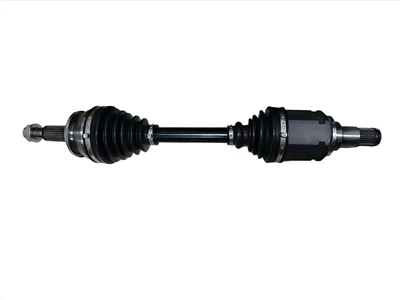
In many front-wheel-drive vehicles, the drive axle assembly consists of a shaft connected to inner and outer CV joints. This configuration allows the wheels to receive torque while accommodating suspension travel and steering movement.
The primary functions of a drive shaft include:
Torque Transmission: Transfers rotational power between drivetrain components.
Mechanical Connection: Connects components that may be separated by a significant distance or operate with changing alignment.
Reliable Operation: Withstands rotational loads and operating stresses under normal vehicle conditions.
Drivetrain Compatibility: Works with joints, splines, and mounting interfaces designed for a particular vehicle application.
Drive shafts are commonly manufactured from steel alloys selected according to strength, weight, fatigue resistance, and application requirements. Some specialized applications use aluminum or composite materials to reduce weight.
What Is a CV Joint?
A CV joint, or constant velocity joint, is a mechanical coupling that transmits rotational motion between shafts operating at an angle while maintaining substantially uniform rotational velocity.
Unlike a conventional single Cardan universal joint, which introduces rotational speed fluctuations when operating at an angle, a properly functioning CV joint is designed to maintain constant velocity transmission.
This characteristic is especially important in front-wheel-drive and all-wheel-drive vehicles, where the driven wheels may experience steering movement and suspension travel.
A typical automotive CV joint assembly includes several important components:
Joint Housing: Contains the internal joint mechanism and provides a connection interface.
Inner Race or Spider: Transfers torque through the joint's internal elements.
Balls or Rollers: Allow articulated movement while transmitting torque.
Cage: Maintains the position of the balls in applicable joint designs.
CV Boot: Protects internal components from water, dirt, and other contaminants.
Lubricating Grease: Reduces friction and wear between moving surfaces.
Different CV joint designs use different internal mechanisms, so not every joint contains all these components.
How Do Drive Shafts and CV Joints Work Together?
In a typical front-wheel-drive vehicle, the CV axle assembly connects the transmission or differential output to the wheel hub.
The assembly commonly includes an inner CV joint, a connecting shaft, and an outer CV joint.
The inner joint often accommodates changes in the effective distance between the transmission and wheel assembly as the suspension moves. The outer joint generally provides the articulation needed for steering while continuing to transmit torque.
When the driver turns the steering wheel or the suspension moves over uneven roads, the CV joints adjust their operating angles while maintaining torque transmission.
This coordinated movement allows the drivetrain to operate across a range of steering and suspension positions without requiring a rigid connection between the transmission and wheel hub.
Why Are Drive Shafts and CV Joints Important?
The performance of a Drive Shaft and CV Joint assembly directly influences several aspects of vehicle operation.
Smooth Power Delivery
Properly functioning components help transmit torque consistently and reduce unwanted drivetrain disturbances.
Driving Comfort
Accurate manufacturing, correct installation, and appropriate joint design help limit vibration and abnormal noise.
Durability
High-quality materials, effective lubrication, and reliable sealing help components withstand repeated operating loads.
Vehicle Reliability
A damaged drive shaft or severely worn CV joint can compromise drivetrain operation and may eventually result in loss of drive to the affected wheel.
For automotive aftermarket buyers, these factors highlight why dimensional accuracy, material quality, and consistent manufacturing standards matter when selecting replacement components.
2. Common Types of Drive Shafts and CV Joints
Drive shafts and CV joints are available in multiple configurations to meet different drivetrain layouts, torque requirements, and operating conditions.
Understanding these differences is important for identifying suitable replacement products and avoiding vehicle compatibility problems.
Types of Drive Shafts Used in Automotive Applications
Front-Wheel Drive Axle Shafts
Front-wheel-drive axle shafts transfer torque from the transaxle or differential to the front wheels.
They typically incorporate CV joints to accommodate steering angles and suspension movement.
These assemblies are widely used in passenger cars, compact SUVs, and other front-wheel-drive vehicles.
Rear-Wheel Drive Propeller Shafts
In many rear-wheel-drive vehicles, a propeller shaft connects the transmission output to the rear differential.
Depending on the design, these shafts may incorporate universal joints, CV joints, slip joints, and supporting bearings.
Their construction is influenced by drivetrain length, operating angles, rotational speed, and torque requirements.
All-Wheel Drive and Four-Wheel Drive Shafts
AWD and 4WD vehicles may use several types of shafts, including propeller shafts and front or rear axle shafts.
The exact configuration depends on the drivetrain architecture, differential arrangement, suspension design, and vehicle application.
These components must be selected according to the specific mechanical requirements of each drivetrain position.
One-Piece and Multi-Piece Drive Shafts
One-piece propeller shafts use a single main shaft section between connection points.
Multi-piece designs incorporate additional sections and may require center support bearings.
Multi-piece configurations are commonly used when packaging requirements, shaft length, or operating characteristics make a single-piece design less suitable.
Types of CV Joints and Their Applications
Different CV joint types are engineered to accommodate particular operating angles, axial movements, and torque requirements.
Rzeppa CV Joint
The Rzeppa joint is a ball-type constant velocity joint commonly used as an outer joint in automotive drive axle assemblies.
Its design allows torque transmission through relatively large operating angles, making it suitable for many steering applications.
Tripod CV Joint
A tripod joint typically consists of a three-armed spider fitted with roller assemblies operating within a specially shaped housing.
This design can accommodate axial movement, making it suitable for many inner CV joint applications.
Double Offset CV Joint
A double offset joint is a ball-type CV joint designed to provide both angular articulation and axial displacement within its specified operating range.
It is used in selected drivetrain applications where these characteristics are required.
Fixed and Plunging CV Joints
CV joints can also be classified according to their ability to accommodate axial movement.
Fixed CV joints primarily provide angular articulation, while plunging CV joints allow the effective shaft length to change as the suspension moves.
The correct design depends on the vehicle's drivetrain geometry and original equipment specifications.
Drive Shaft vs. CV Joint: Key Differences
Although the two components often work together, their mechanical purposes are not identical.
|
Feature |
Drive Shaft |
CV Joint |
|
Primary Function |
Transmits rotational torque |
Transmits torque through changing angles |
|
Main Structure |
Shaft or shaft assembly |
Articulating mechanical joint |
|
Typical Applications |
Propeller shafts and axle shafts |
Drive axle and selected driveline assemblies |
|
Common Materials |
Steel, aluminum, or composites |
Primarily engineered steel components |
|
Typical Problems |
Bending, imbalance, spline wear |
Boot damage, lubricant loss, internal wear |
|
Replacement Considerations |
Shaft condition, balance, and fitment |
Joint condition, articulation, and compatibility |
In some applications, the drive shaft and CV joints are supplied as one complete assembly. In others, individual components may be available separately.
How to Identify the Correct Type for Your Vehicle
Selecting the correct drive shaft or CV joint requires more than identifying the vehicle manufacturer.
Buyers should verify the vehicle model, production year, drivetrain configuration, transmission type, installation position, and relevant OEM part number.
Important dimensional specifications may include shaft length, spline count, joint diameter, mounting interface, and ABS-related features where applicable.
Even vehicles within the same model family may use different drivetrain components depending on engine, transmission, and production configuration.
For international automotive parts distributors, accurate fitment information and reliable OEM cross-reference data are essential for reducing ordering errors and product returns.
3. Common Drive Shaft and CV Joint Problems: Symptoms, Causes, and Solutions
Like other mechanical drivetrain components, drive shafts and CV joints experience wear during operation.
Their service life depends on several factors, including operating loads, lubrication, sealing performance, installation quality, and driving conditions.
Recognizing common failure symptoms can help technicians identify potential problems before more serious drivetrain damage occurs.
Common Symptoms of a Failing CV Joint
Clicking Noises When Turning
A repetitive clicking or popping noise during sharp turns, particularly under acceleration, is a common symptom associated with a worn outer CV joint.
As internal joint surfaces wear, excessive clearance may develop and produce audible noise under load.
However, other suspension or drivetrain components can produce similar symptoms, so further inspection is necessary.
Vibration During Acceleration
Vibration that becomes more noticeable during acceleration may be associated with a worn inner CV joint, damaged axle shaft, or other drivetrain issues.
The vibration may change with vehicle speed or applied torque.
Because wheel imbalance, tire problems, engine mounts, and other components can also cause vibration, diagnosis should consider the complete vehicle system.
Grease Leakage Around the CV Boot
A damaged CV boot is one of the most important warning signs of potential joint problems.
The boot helps retain grease and prevent contaminants from entering the joint.
When it develops cracks or tears, lubricant may escape while dirt and moisture enter the internal mechanism.
Continued operation under these conditions can accelerate wear and eventually lead to joint failure.
Clunking During Acceleration or Deceleration
Unusual clunking sounds during changes in drivetrain load may indicate excessive clearance in a CV joint or another drivetrain connection.
Inspection is required to determine the actual source.
Common Drive Shaft Problems
Drive shaft failures vary according to the type of shaft and vehicle application.
Shaft Bending or Deformation
A shaft may become bent following an impact or other excessive mechanical loading.
Deformation can affect rotational behavior and produce vibration.
Dynamic Imbalance
Propeller shafts operating at higher rotational speeds require appropriate balance characteristics.
Imbalance may cause vibration, increased bearing loads, and reduced component life.
Spline Wear
Splined connections transmit torque between mating components.
Excessive wear or incorrect engagement may introduce unwanted movement, noise, or connection problems.
Universal Joint or Support Bearing Wear
In propeller shaft systems equipped with universal joints or center support bearings, deterioration of these components may produce vibration, noise, or driveline instability.
Corrosion and Fatigue Damage
Environmental exposure, repeated loading, and inadequate protective measures can contribute to deterioration of shaft components over time.
What Causes Premature Drive Shaft and CV Joint Failure?
Several conditions can accelerate drivetrain component wear.
Insufficient Lubrication
CV joints require suitable lubrication to reduce friction and protect their moving contact surfaces.
Lubricant loss, contamination, or incorrect grease selection may significantly increase wear.
Damaged Protective Boots
Cracked or torn boots expose joint components to water, dust, and abrasive particles.
This can lead to internal corrosion, surface damage, and premature failure.
Incorrect Installation
Improper installation procedures, incorrect fastener tightening, or unsuitable replacement parts may introduce excessive loads or damage critical components.
Excessive Mechanical Loads
Repeated impact loading, severe operating conditions, or drivetrain modifications beyond the original design requirements can accelerate wear.
Manufacturing or Material Defects
Poor dimensional control, unsuitable material selection, inconsistent heat treatment, or inadequate surface finishing may reduce component durability.
These issues reinforce the importance of selecting replacement parts from suppliers with effective manufacturing and quality control processes.
How to Inspect Drive Shaft and CV Joint Problems
A systematic inspection can help identify potential drivetrain problems.
|
Symptom |
Possible Cause |
Recommended Inspection |
|
Clicking while turning |
Worn outer CV joint |
Inspect joint, boot, and related components |
|
Vibration during acceleration |
Inner joint wear or driveline issue |
Check axle assembly and other vibration sources |
|
Grease around the wheel area |
Torn boot or loose clamp |
Inspect boot and grease condition |
|
Clunking during load changes |
Excessive drivetrain clearance |
Inspect joints, splines, and mountings |
|
Vibration at certain speeds |
Shaft imbalance or deformation |
Check shaft condition and balance |
|
Visible shaft damage |
Impact, corrosion, or fatigue |
Assess damage against service specifications |
These symptoms are diagnostic indicators rather than definitive proof of a particular failure.
Inspection and repair should follow the relevant vehicle manufacturer's procedures.
Should You Repair or Replace a Damaged CV Joint?
The decision depends on the condition of the joint and the availability of approved service components.
If a CV boot is damaged but the joint remains clean, properly lubricated, and free from unacceptable wear, boot replacement may be possible.
However, when the joint has experienced substantial contamination, excessive clearance, damaged contact surfaces, or persistent abnormal noise, replacement may be necessary.
In some vehicle applications, replacing the complete CV axle assembly may be more practical than replacing an individual joint.
Buyers and repair professionals should consider component availability, repair labor, manufacturer specifications, and long-term reliability before selecting a repair method.
4. How to Choose Quality Drive Shafts and CV Joints: A Buyer's Guide
For automotive parts importers, wholesalers, and distributors, purchasing drive shafts and CV joints involves more than comparing unit prices.
Product compatibility, manufacturing consistency, technical documentation, and supplier reliability all influence long-term procurement performance.
The following considerations can help international buyers evaluate replacement drivetrain components.
Verify Vehicle Compatibility and OEM Specifications
Accurate vehicle fitment is the foundation of a successful automotive parts purchasing decision.
Before placing an order, buyers should verify the relevant OEM reference numbers and vehicle application information.
Important specifications may include:
Vehicle make, model, and production year
Engine and transmission configuration
Front, rear, left, or right installation position
Overall shaft length and compressed or extended length where relevant
Inner and outer spline counts
Joint housing dimensions
Mounting flange and connection design
ABS-related features, where applicable
A product that appears visually similar to the original component may still have incompatible dimensions or connection details.
For bulk purchasing, suppliers should provide reliable fitment information and cross-reference data to help distributors manage product catalogs accurately.
Evaluate Materials and Manufacturing Quality
Material selection and manufacturing processes strongly influence the durability of drivetrain components.
Material Quality
Drive shafts and CV joint components commonly use steel grades selected according to strength, toughness, fatigue resistance, and wear requirements.
The appropriate material depends on the component design and intended application.
Heat Treatment
Heat treatment can improve the hardness and wear resistance of selected components while maintaining the mechanical properties required for reliable operation.
Inconsistent heat treatment may contribute to premature wear or cracking.
Precision Machining
Accurate machining helps maintain correct component dimensions, spline engagement, and joint geometry.
Poor dimensional control may create fitment problems or abnormal operating conditions.
Surface Finishing
Proper surface finishing can help reduce unwanted friction and improve contact performance in moving components.
Corrosion Protection
Protective coatings and appropriate material treatments can help reduce corrosion during storage, transportation, and service.
International buyers should evaluate whether suppliers have documented processes for controlling these manufacturing characteristics.
Review Quality Testing and Inspection Procedures
A reliable supplier should be able to explain how its products are inspected and validated.
Relevant quality checks may include:
Dimensional Inspection
Verifies critical dimensions, spline geometry, connection interfaces, and other fitment requirements.
Hardness Testing
Checks whether specified components meet the applicable material and heat-treatment requirements.
Torque and Torsional Strength Testing
Evaluates the ability of relevant components to withstand specified torsional loads.
Fatigue and Durability Testing
Assesses component behavior under repeated operating loads or defined test cycles.
Dynamic Balance Testing
May be required for propeller shaft assemblies and other applications where rotational balance is a critical specification.
Boot and Sealing Verification
Evaluates protective boot performance and sealing integrity under relevant operating conditions.
Testing requirements vary by product type and vehicle application. Buyers should request appropriate specifications and supporting test records rather than assuming that every component requires the same test program.
Where applicable, automotive buyers may also review supplier quality management certifications, such as ISO 9001 or IATF 16949, while verifying their scope and validity.
Certification alone does not establish that a particular part meets all required performance specifications.
OEM vs. Aftermarket Drive Shafts and CV Joints
Automotive buyers frequently compare original equipment replacement parts with aftermarket alternatives.
OEM-related parts are associated with original equipment supply arrangements or original equipment specifications, while aftermarket products are supplied through the vehicle replacement parts market.
Aftermarket components may offer broader sourcing options and different pricing structures.
However, aftermarket quality varies significantly between manufacturers and product lines.
A well-engineered aftermarket drive shaft or CV joint may provide suitable performance for its intended application, but buyers should evaluate supporting technical evidence rather than relying on marketing claims.
Important comparison factors include fitment accuracy, material specifications, manufacturing consistency, testing documentation, warranty terms, and total procurement cost.
For distributors serving different market segments, maintaining an appropriate product range may help meet varying customer requirements.
How to Select a Reliable Drive Shaft and CV Joint Supplier
Choosing the right supplier is particularly important for importers and distributors managing large product catalogs or repeat orders.
A supplier evaluation should consider the following areas.
Product Range and Vehicle Coverage
A broad, well-documented product range can help buyers consolidate purchasing across multiple vehicle applications.
Manufacturing and Quality Control
Buyers should assess whether the supplier has documented inspection procedures, traceability systems, and appropriate quality controls.
Technical Support
Reliable OEM cross-reference information, dimensional data, and application support can reduce ordering mistakes.
Production Capacity and Lead Times
Consistent delivery performance is important for inventory planning and customer service.
Packaging and Private Label Options
Distributors may require branded packaging, barcode labels, product identification, or customized packaging specifications.
Export and After-Sales Support
International buyers should clarify shipping arrangements, documentation requirements, quality claim procedures, and warranty conditions.
Rather than selecting a supplier based solely on the lowest quotation, procurement teams should evaluate total value, including quality consistency, fitment accuracy, delivery reliability, and after-sales support.
Essential Questions Before Placing a Bulk Order
Before confirming a wholesale order, international buyers should ask prospective suppliers several practical questions.
Can you provide accurate OEM cross-reference and vehicle application data?
What materials and manufacturing processes are used for the relevant products?
Which dimensional and performance inspections are performed?
Can you provide samples for fitment and quality evaluation?
What are the minimum order quantities and standard production lead times?
Are customized packaging and private label services available?
What traceability and quality claim procedures do you follow?
What documentation can you provide for international shipments?
These questions help buyers compare suppliers systematically and identify potential procurement risks before committing to larger orders.
For new supplier relationships, sample evaluation and controlled initial orders may provide useful evidence of product consistency before purchasing volumes increase.
5. Drive Shaft and CV Joint Maintenance Tips for Longer Service Life
Proper maintenance and correct installation can help reduce premature drivetrain component wear.
Although service requirements vary by vehicle, several general practices are important for maintaining drive shaft and CV joint reliability.
Inspect CV Boots and Seals Regularly
CV boots protect the internal joint mechanism and help retain lubricant.
During routine vehicle inspections, technicians should check for cracks, tears, loose clamps, and grease leakage.
Early identification of boot damage may prevent contamination from causing more extensive internal wear.
Any repair should follow the vehicle manufacturer's recommended procedure.
Follow Correct Installation Procedures
Improper installation can damage otherwise serviceable components.
Technicians should confirm that replacement parts match the required vehicle specifications and use the correct installation procedures.
Critical fasteners must be tightened according to manufacturer instructions, and any required single-use fasteners should be replaced.
Care should also be taken to prevent damage to protective boots, seals, and joint components during installation.
Avoid Excessive Mechanical Stress
Severe impacts, repeated overloads, and unsuitable drivetrain modifications may increase stress on drive shafts and CV joints.
Vehicles used in demanding conditions may require more frequent inspections based on their operating environment and maintenance requirements.
After a significant underbody impact, the relevant drivetrain components should be inspected for damage.
Know When Replacement Is Necessary
Drive shafts and CV joints do not have one universal replacement interval applicable to every vehicle.
Replacement decisions should be based on inspection findings, component condition, operating symptoms, and manufacturer service criteria.
Persistent joint noise, excessive wear, structural damage, or unacceptable shaft deformation may indicate the need for replacement.
Timely diagnosis and appropriate repair can help prevent further drivetrain problems and unnecessary maintenance expenses.
6. Frequently Asked Questions About Drive Shafts and CV Joints
What is the difference between a drive shaft and a CV joint?
A drive shaft transmits rotational torque between drivetrain components, while a CV joint allows torque to be transmitted through changing operating angles at substantially constant rotational velocity.
In many front-wheel-drive vehicles, a complete CV axle assembly includes a connecting shaft and two CV joints. However, other types of drive shafts may use different joint configurations.
What are the most common signs of a bad CV joint?
Common symptoms include clicking noises during turns, vibration during acceleration, grease leakage from damaged CV boots, and unusual clunking sounds during drivetrain load changes.
These symptoms may also be caused by other mechanical problems, so proper inspection is necessary before replacing components.
Can a damaged CV joint be repaired?
Repair may be possible when damage is limited to the protective boot and the internal joint remains in acceptable condition.
If the joint has significant internal wear, contamination, or mechanical damage, replacement is generally the more appropriate solution.
The correct repair method depends on the vehicle manufacturer's specifications and the availability of suitable replacement components.
How long do drive shafts and CV joints typically last?
There is no universal service life for all drive shafts and CV joints.
Durability depends on product design, material quality, operating conditions, lubrication, protective boot integrity, and maintenance practices.
Regular inspection and timely repair of damaged protective boots can help reduce the risk of premature CV joint failure.
How do I choose a reliable drive shaft and CV joint supplier?
Start by evaluating product compatibility, OEM cross-reference accuracy, manufacturing quality, and available inspection documentation.
For wholesale purchasing, also consider product coverage, minimum order quantities, production lead times, packaging options, technical support, and after-sales service.
Requesting samples and reviewing relevant quality records can help reduce procurement risks before placing larger orders.
Conclusion: Choosing Reliable Drive Shafts and CV Joints for Long-Term Performance
Drive shafts and CV joints are essential components of modern automotive drivetrains, helping transmit power while accommodating the mechanical movements required by different vehicle configurations.
Understanding the various types of drive shafts and CV joints, their operating principles, and common failure symptoms allows automotive professionals to make better maintenance and replacement decisions.
For international automotive parts importers, wholesalers, and distributors, selecting reliable replacement components requires careful attention to vehicle compatibility, material quality, manufacturing precision, and supplier quality control.
A well-informed purchasing strategy can help reduce fitment errors, minimize product returns, and support long-term customer satisfaction.
Whether sourcing individual CV joints or complete drive shaft assemblies, buyers should prioritize verified specifications, consistent product quality, and dependable supplier support.